
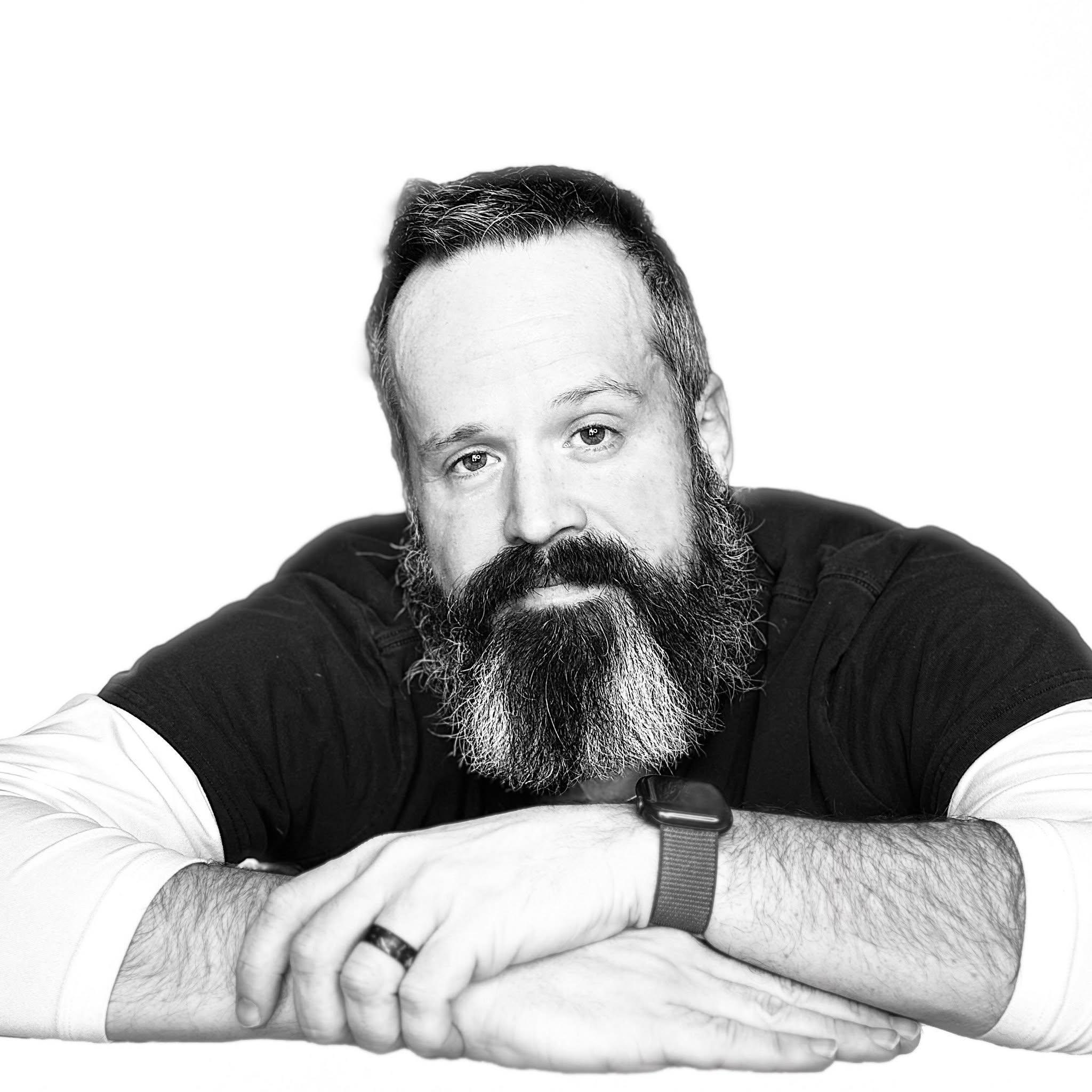
Candidate for Utah House of Representatives - District 39 in 2026 Utah General Election.
View your personalized ballot, check your voter registration, make a plan to vote, and research every name and measure on the ballot with BallotReady.
Get StartedThat same principle applies to culture and the arts. Art is one of the primary ways human beings process reality, challenge assumptions, transmit values, and imagine futures that do not yet exist. Long before societies change their laws, they change their stories. Long before people can name what feels wrong, artists help them feel it. Long before a new possibility becomes policy, it appears in music, literature, theater, film, dance, visual art, and design. Learn more
As a legislator, I will work to strengthen the Utah Division of Arts & Museums, expand public grants for artists and community organizations, increase arts education funding from kindergarten through higher education, and begin building a permanent Utah arts endowment capable of supporting creative life across generations. Learn more
I approach LGBTQ equality through a pluralistic lens rooted in the belief that infinite diversity in infinite combinations is our strength. Human beings are varied in identity, experience, belief, family, and expression. Systems that try to flatten that diversity inevitably become brittle. Systems that make room for difference adapt and endure. Learn more
I support creating a state-funded veterans care continuity program through the Utah Department of Veterans and Military Affairs. When federal staffing losses interrupt care, the state should be able to provide temporary bridge services until consistent federal care is restored. That could include short-term counseling, community mental-health referrals, medication-management coordination, peer support, crisis navigation, telehealth access, and assistance finding qualified providers who understand military trauma. Learn more
By connecting Hill Air Force Base, the Utah Test and Training Range, the Space Force, Utah’s aerospace industry, and a federally licensed reentry facility, we could ensure that Hill remains indispensable not only through the next round of military planning, but through the next century of American defense. Learn more
Utah should not design its veterans system around the assumption that a federal bureaucracy this large, changing this quickly, will always identify every problem, reach every rural community, resolve every wrongful denial, or catch every veteran before a bureaucratic delay becomes a personal crisis. Even when the federal VA is functioning well overall, individual veterans still get lost between offices, eligibility rules, medical systems, appeals processes, and agencies that do not communicate with one another. Learn more
At its core, my medical cannabis policy is about respect. Respect for patients. Respect for voters. Respect for medical evidence. Respect for constitutional rights. And respect for the limits of regulatory power. Utah can build a program that is safe without being punitive, accountable without being hostile, and regulated without becoming captured by bureaucracy or entrenched market interests. We helped create this program because patients deserved relief. The work now is to make sure the system remembers who it was built for. Learn more
I believe public education should be the most funded, most protected, and most deeply resourced public good we have. No qualifiers. No apologies. If we say we care about the future, then our budgets, our policies, and our priorities should reflect that commitment. Education is the foundation everything else rests on—our economy, our democracy, and our shared quality of life. It is not an expense to be managed down. It is the smartest investment we can make in the kind of future we say we want. Learn more
If an industry wants to build one of the largest resource-consuming facilities in Utah history, it should have to prove that the benefits outweigh the costs and that Utah families will not be left subsidizing it. That is why I have proposed treating large data centers more like extractive industries through a Data Extraction and Infrastructure Tax. The state should meter and publicly account for six major impacts: electricity consumption, water consumption, land footprint, emissions, thermal output, and on-site power generation. Major projects should make an upfront infrastructure contribution tied to their projected buildout, rather than waiting for residents and utilities to discover years later that transmission lines, roads, water systems, and public services must be expanded at public expense. Learn more
Energy policy has to deal with reality, not slogans. Nuclear energy, including small modular reactors, is one of the few carbon-free power sources that can provide reliable baseload power day and night, regardless of weather. Ignoring that reality doesn’t make it go away—it just shifts the consequences onto ratepayers, working families, and future generations. If we fail to plan responsibly, the result won’t be ideological purity. It will be instability, skyrocketing utility bills, and a grid pushed beyond its limits. Learn more
The land, water, air, and ecosystems that sustain life in Utah were not created for short-term extraction or political convenience. They were entrusted to us, and our responsibility is to pass them forward in better condition than we received them. That responsibility does not belong to one political party, one generation, or one ideology. It belongs to everyone who expects Utah to remain livable. Stewardship means thinking in time horizons longer than an election cycle. It means asking not only what benefits us now, but what protects our children and grandchildren from inheriting irreversible damage. A society that consumes its future to make the present more comfortable is not pragmatic. It is reckless. Learn more
Here is what I actually support. I support firearm safety education and training because responsible ownership is built, not assumed. Gun owners should understand safe handling, maintenance, storage, transportation, and the laws governing the firearms they possess. Utah should support voluntary training, hunter education, community partnerships, and programs that make safety information accessible without treating gun owners as suspects. Learn more
The most effective approach is to make responsible storage easy, affordable, and culturally normal. Utah should expand access to free or reduced-cost gun locks, lockboxes, safes, and secure vehicle-storage options. We should consider incentives that help families purchase quality storage rather than creating policies that only people with disposable income can easily follow. Learn more
We should also expand voluntary temporary-storage options for people who recognize that they or someone in their household may be entering a dangerous period. Utah already recognizes voluntary firearm safe-harbor approaches. We can build on that foundation by making it easier for someone to temporarily place a firearm with an eligible trusted person, participating dealer, range, or law-enforcement agency without stigma, unnecessary bureaucracy, or fear that asking for help will automatically cost them their rights forever. Learn more
I support funding Medicaid home- and community-based services at a level that reflects actual need, while also investing in the direct-support workforce required to provide that care. Qualifying for help and actually receiving it should not be two different multiyear processes. A promise of support that never arrives is not support. Learn more
Local control matters. Communities deserve a real seat at the table when shaping how their neighborhoods evolve. But local control cannot become a synonym for exclusion, and statewide coordination cannot become a synonym for state domination. The role of the state should be to set fair guardrails, invest in infrastructure, and make sure the system works for everyone. A diverse state needs flexible housing options that reflect diverse lives. One rigid housing model cannot serve infinite combinations of families, incomes, abilities, and stages of life. If Utah wants to remain a place where people can put down roots, raise families, and build stable lives, we have to start treating housing like essential infrastructure instead of a luxury commodity— and that starts with making the word "affordable" mean something again. Learn more
Residential customers should not be asked to subsidize infrastructure built primarily for some of the largest and wealthiest corporations in the world. If a company’s operation creates the need for new capacity, that company should bear the cost attributable to its demand. The profits should not remain private while the risks and infrastructure costs are quietly socialized onto households that never approved the deal. Learn more
Workplace safety belongs there too. Utahns working in construction, warehousing, healthcare, transportation, hospitality, agriculture, mining, and other extractive trades face real risks every shift. Safety rules only matter when they are enforced, and enforcement only works when workers can report hazards without risking retaliation or losing their jobs. A system that punishes people for identifying danger has already decided that output matters more than the person producing it. I will not accept that tradeoff. The same principle applies to wage theft and worker misclassification. When an employer withholds earned wages, relabels employees as independent contractors, or manipulates hours to avoid providing benefits, that is not clever business. It is a cost transfer— off the company’s books and onto workers, families, and the public systems left to absorb the damage. Learn more
View your personalized ballot, check your voter registration, make a plan to vote, and research every name and measure on the ballot with BallotReady.